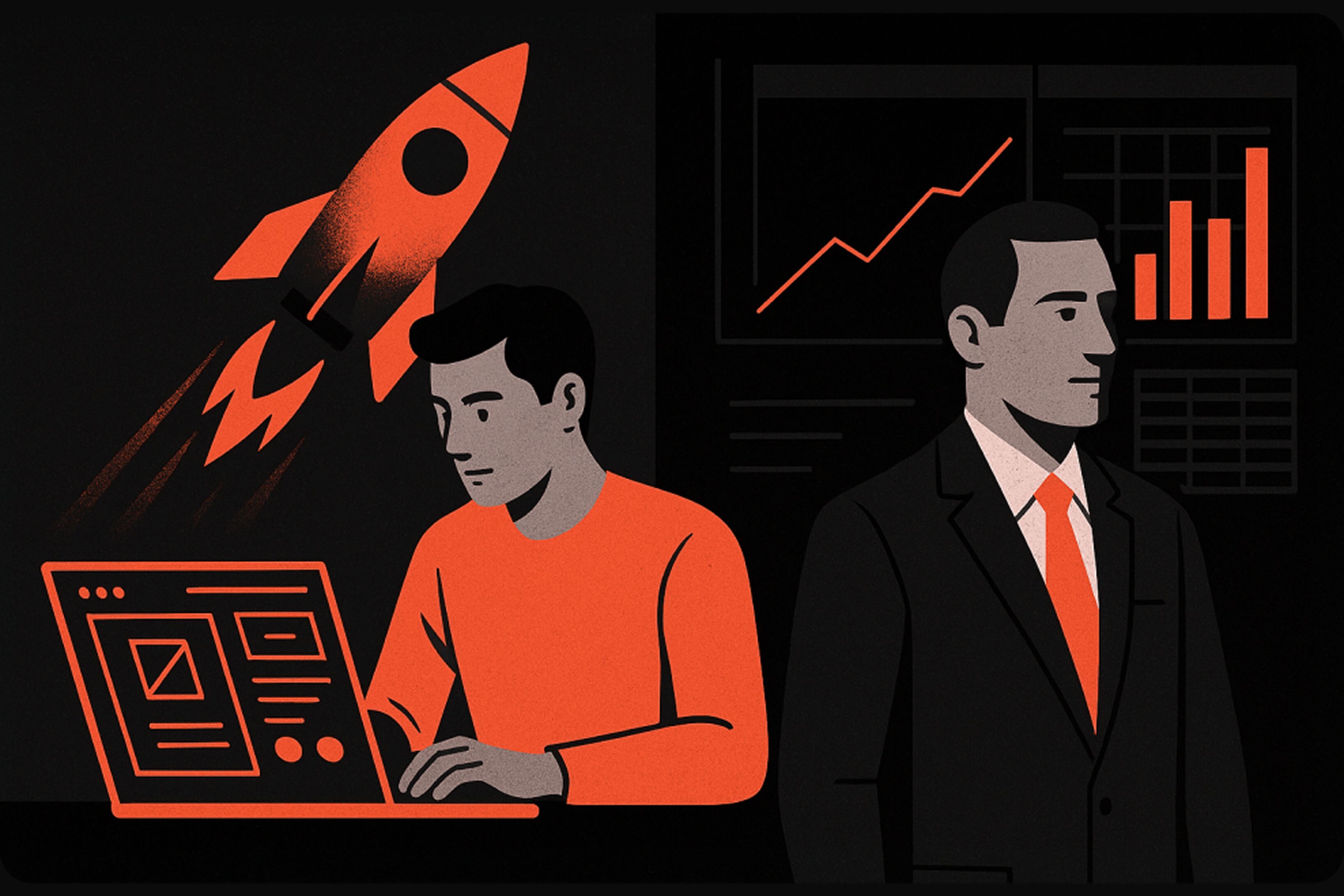
Designing for Startups vs. Enterprises — How UX/UI Drives Business Growth
In today's product-led world, UX/UI design is not just about aesthetics — it's a strategic asset that directly influences user engagement, trust, and business performance. Whether you're a startup pushing for product-market fit or an enterprise managing scale, UX/UI decisions shape your user experience and define how effectively your digital product performs.
However, the priorities and constraints in design differ significantly between startups and large organizations. Here's how to think about UX/UI depending on where your company is today.
UX/UI for Startups: Speed, Clarity, and Differentiation
Startups thrive on agility. Design in early stages must help you validate assumptions, communicate value fast, and stand out in competitive markets.
1. Prioritize Usability Over Perfection
A Minimum Viable Product (MVP) doesn't have to be pixel-perfect — but it must be intuitive. Early-stage UX should focus on clarity and ease of use. A confusing interface can kill adoption before users even understand your product's value.
2. Design for Iteration
The ability to move quickly is one of a startup's superpowers. Design systems should be lean and flexible, allowing for fast testing and learning. Wireframes, prototypes, and real user feedback loops are critical for refining features based on actual behavior.
3. Make a Bold First Impression
Startups are often unknown brands. A strong visual identity and memorable UX help build credibility quickly. Creative UI, animation, and polished micro-interactions can set your product apart and foster trust in early users.
According to research, 88% of users are less likely to return after a poor experience. In early stages, design can make or break product adoption.
UX/UI for Enterprises: Scalability, Consistency, and Trust
Larger companies deal with more complexity — multiple platforms, broader audiences, legacy systems, and compliance requirements. UX/UI in this context must support consistency, performance, and sustainable innovation.
1. Build and Maintain Design Systems
Consistency across teams and platforms is vital. A centralized design system enables scalability and ensures that teams follow shared principles for components, spacing, accessibility, and behavior. It also speeds up development and reduces maintenance costs.
2. Let Data Drive Design Decisions
Unlike startups, enterprises usually have significant user data. Leverage analytics and usage patterns to identify pain points and improve journeys. Continuous testing and optimization lead to measurable gains in user retention and satisfaction.
3. Balance Innovation with Stability
Innovation is necessary, but enterprises can't afford to alienate loyal users. Design teams must introduce changes incrementally, using controlled rollouts and onboarding experiences that guide users through new features or redesigned flows.
4. Design for Compliance and Accessibility
Industries like finance and healthcare have strict regulatory requirements. UX must comply with standards (e.g., WCAG, HIPAA), while still providing an elegant and intuitive experience. Accessible design is not optional — it expands your audience and reduces legal risk.
McKinsey reports that design-led companies outperform competitors by nearly 2x in terms of revenue growth.
Why UX/UI Matters at Every Stage
Regardless of company size, the business case for UX is clear:
• Every $1 invested in UX brings up to $100 in return (Forrester) • 94% of first impressions are design-related • Poor UX is a leading reason for customer churn
Good UX increases user trust, reduces acquisition costs, drives conversion, and builds brand loyalty. Bad UX silently kills growth.
Conclusion
Startups and enterprises face different challenges — but they both win by putting users first. Whether you're designing a lean MVP or scaling a mature platform, UX/UI is not decoration. It's how your product works. It's how users feel. And it's how businesses grow.